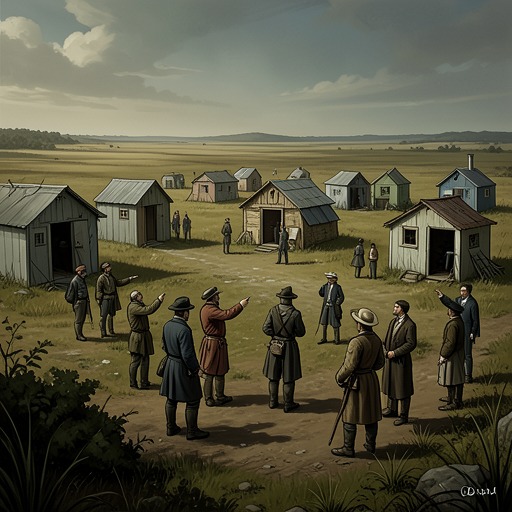
Let a thousand flowers bloom and then pick the one that smells the sweetest
The Wisdom of Crowds“Let a thousand flowers bloom and then pick the one that smells the sweetest” is the book’s compact expression for a two-stage method of collective problem-solving: permit many possible solutions to emerge, then identify the strongest. Its point is not that every attempt will succeed, but that variety can uncover answers a tightly directed organization might never produce—and that variety must ultimately be paired with a way to choose.
Meaning and Use
The expression appears in the discussion of Linux, whose contributors work across the world without a formal organization. Unlike a corporation that assigns employees to particular problems, Linux can draw on a large and varied supply of programmers. The book argues that the resulting range of possible fixes increases the chance that someone will both find a solution to a bug and notice when a bug appears.
The flowers image turns that principle into a sequence: first let alternatives proliferate; then pick the one that smells sweetest. The “sweetest” option is not specified in advance by a central planner. It is discovered among the attempts, making selection dependent on the diversity that came before it.
Why Apparent Waste Can Help
Linux’s method resembles a market and a bee colony. Like many foragers searching for a route to the flowers, programmers may work on solutions that only a few will find. In the narrow sense of effort spent, this looks inefficient: hundreds or thousands of people may devote time to a problem whose eventual answer comes from only a handful.
The book treats that duplication as a potential strength rather than simply a cost. Generating many alternatives and then winnowing them down can sustain growth, just as it does in a free market. A traditional company has the practical advantage of mobilizing people toward a defined problem, but its limited workforce, time, and organizational politics also restrict the possible solutions. The expression marks the contrast between directed effort and broad exploration; it does not claim that every organization should abandon direction.
The Need to Choose
The image leaves an essential question open: who picks the sweetest flower? The book’s answer is that decentralized exploration alone cannot guarantee an intelligent result. A system needs a means of aggregating what its participants discover. In the opening cattle-estimation experiment, Francis Galton supplied that mechanism by counting the votes; in a free market, prices gather information imperfectly but effectively from buyers and sellers.
The expression therefore names more than an invitation to let alternatives flourish. Its logic depends on the passage from dispersed attempts to selection: without aggregation, a thousand flowers may bloom without producing a collective judgment. The phrase’s enduring force lies in holding both steps together—abundance first, discernment after it—rather than mistaking the number of options for wisdom in itself.